

Metal building systems employ pre-fabricated metal structures (primarily steel) to set up the building and other civil structures. Previously metal buildings were reserved for some commercial or industrial applications such as warehouses, factory settings, etc. but the trend has been going slowly mainstream with contractors working with pre-fabricated metal structures to erect the buildings.
Metal fabrication for building systems is primarily concerned with designing and creating metal structures and components used in building structures. As the adoption of this type of construction increases, both functional (structural) and aesthetic factors are also accounted for during construction. Engineers and architects nowadays use high fidelity 3D models and rendering of the building structures that help to build a road map for precise manufacturing particular to a given building.
Complex Building Structures Require Custom Metal Components
Building structures come in various shapes and forms depending on their use of case, functionality, social significance, and crucially with the type of materials used during its construction. Custom and on-demand industrial fabrication is very important for complex building structures. Precision metal machining helps manufacturers meet the specific demands of these custom components with high repeatability. The use of advanced cutting, forming, and machining technologies allows for the creation of intricate geometries which would be difficult to achieve with conventional methods.
Off the shelf components used in building construction such as I-beams, columns, angle brackets, etc. are used in rectilinear construction and pose issues when conventional design is not followed in the building. In Burj Al Arab, fixers for the nuts and bolts were custom made, inspired by the cams used in engines, to account for the extreme heat and thermal expansions in the desert region. Custom manufacturing allowed for joining the giant triangular steel trusses while ensuring alignment despite the thermal changes.
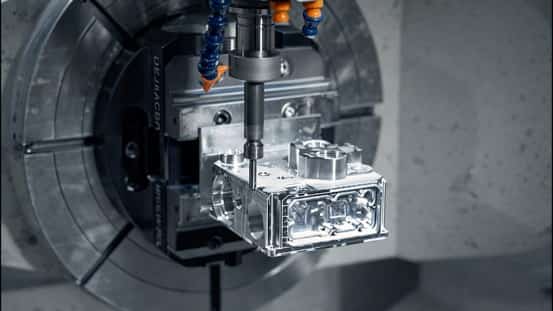
The production of custom metal components requires precision manufacturing which can be achieved with the help of CNC, laser cutting, press brakes, and other advanced mechanisms. The building structures dictate the type of components suitable for the construction, such as high truss span requiring high strength steel as it is able to handle the loads and forces in a better manner compared to concrete structures.
Precision Fabrication Impacts Material Performance
While the intrinsic properties of the material have a huge role during the design and analysis process, the steps taken to produce the said component can have an impact on the final performance. One of the core things to consider during building construction is the point of stress concentration on the structure. In pre-fab structures, these are normally present on the connection points and nodes where the load transfer occurs. Since the entire system is as strong as its weakest link, it is crucial from a manufacturing perspective to take into account the stress distribution and stress flow under various load conditions.
The conventional manufacturing techniques such as casting are highly economical and is extremely scalable. But under normal conditions, casting produces products with high surface roughness, flashing, geometric deviations (due to shrinkage) etc. These imperfections act as stress risers, increasing the local stress concentration factor (Kt):
Elevated values of Kt accelerate the crack initiation and reduce both static and fatigue strength. One of the major issues with the cast products is the presence of the grain boundaries which become a major source of creep and failure down the line.
Fabrication processes such as laser cutting, custom CNC machining, and controlled forming help to minimize the heat affected zone (HAZ) and subsequent mechanical distortions. This helps to ensure that the material retains its intended strength, ductility, and fatigue resistance. In contrast, less precise methods are more than likely to induce internal stress on the structure and compromise performance over time. A practical illustration of this is in the fabricated steel moment connection where when bolt holes are punched rather than drilled, the punching can cold-work the metal around the hole edge and introduce residual stress.
Most of the building structures are subjected to changing loads (altering wind velocities, higher foot load during peak hour, etc.) which changes the stress amplitude periodically, which indicates the onset of fatigue in the material. Fatigue failure is of extreme concern because it causes the material to fail way below its yield point, thus reducing its load bearing capacity. It is affected by a myriad of things such as rough surface finish, tool marks, irregular asperities, residual stress, and others. Utilization of precision fabrication techniques such as robotic welding, directional solidification, controlled heat input, fine machining, etc. is necessary to remove these defects and preserve the material performance as intended.
Precision Metal Fabrication Ensures Dimensional Accuracy and Fit
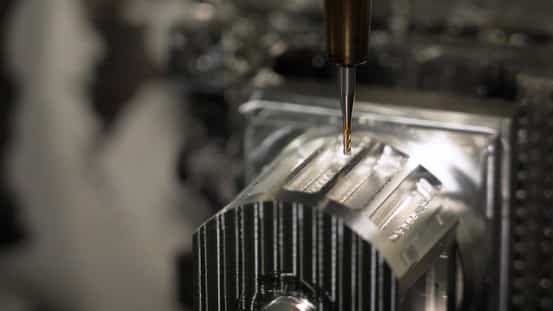
Dimensional accuracy and tolerance are some of the most critical factors in metal building construction. Even slight deviations in the component dimensions can lead to significant alignment issues, increase stress concentration, and produce difficulties during the assembly process.
Complex metal structures are designed to maintain a certain load bearing capacity which is available when the parts are joined as intended. For example, when long span structures such as bridges, trusses, etc. are built, they require gusset plates to connect the various structural members (beams & braces) to a single node. They allow for the effective distribution of the tension, compression, and shear forces on the nodes when designed and fabricated properly. When multiple members are to be joined together, it is paramount that they maintain the necessary level of dimensional accuracy and are prepared with precise tolerances.
Consistent dimension control also helps to reduce on-site modifications such as re-drilling, shimming, etc. which not only consume time and resources but more importantly introduce stress into the structure, which reduces its longevity and reliability.
Precision Fabrication Enables Faster and More Efficient On-Site Assembly
The assembly efficiency of a component is directly correlated to its tolerances and accuracy in the final product. When a component is made with a precise manufacturing process, the likelihood of assembly failure and rejection on-site reduces drastically. High accuracy in the components reduces the need for rework and allows the crew to follow a streamlined assembly process. Things such as pre-drilled holes align accurately with the connection points and allow the members to connect quickly.
Furthermore, precision fabrication supports modular design approaches and can significantly improve the material handling, which is crucial while assembling large and complex structures. Large sections of buildings can be assembled off-site under controlled conditions and then transported for final installation. This approach not only accelerates the construction but also improves safety by reducing the amount of work performed in challenging environments.

Consistency in Fabrication Supports Pre-Engineered Building Systems
Pre-engineered metal buildings (PEMB) rely heavily on consistency and have been gaining trends in the modern construction field. These systems are designed as integrated packages where each component must work in harmony with others. Any disruption in the fabrication creates imbalance and leads to performance issues.
Precision fabrication maintains uniformity across all components from primary structural members to secondary framing elements. This consistency is essential for maintaining load distribution and structural stability.
As PEMB relies on scalability and reproducibility, precision manufacturing ensures that the components are produced with identical specifications enabling efficient replication of the building’s designs. This further improves the logistics associated with the manufacturing and transport of the component. Quality control is also enhanced through precision fabrication and automated inspection systems to help identify the critical areas in a produced component. This reduces the likelihood of defects and ensures that each component meets the required standards.
Conclusion
Precision metal fabrication has become a cornerstone in modern metal building systems, and as the building designs grew more complex, the need for accurate, consistent, and high-quality fabrication processes became increasingly critical.
Precision manufacturing allows for rapid custom component design, preservation of material performance, dimensional accuracy, and rapid on-site assembly even for complex and intricate designs. It also underpins the success of pre-engineered systems by providing consistency and reliability required for large-scale deployment.
The metal fabrication industry requires efficiency mode of production and durability in the final products. Precision metal fabrications produce durable, cost-effective, and innovative metal building structures.