

Most Common Home Styles in Texas
Texas homes reflect a wide range of architectural influences, from traditional ranch houses and historic Spanish Colonial designs to modern farmhouses and contemporary residences. Climate, regional materials, lot size, and lifestyle all influence the home styles found throughout the state.
Understanding the most common home styles in Texas can help homeowners explore design ideas, recognize defining architectural features, and choose a direction for a new home or renovation project.
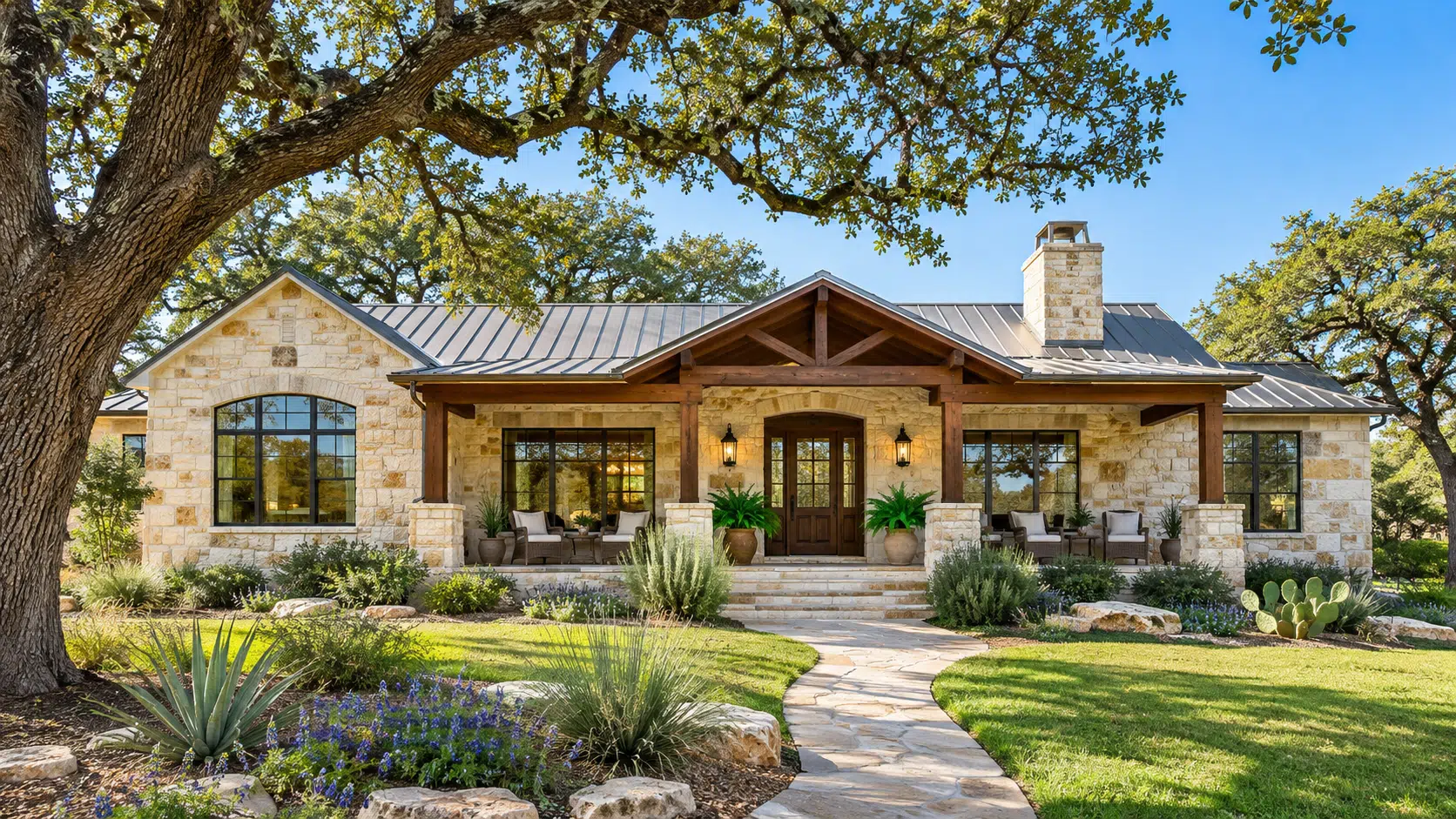
1. Texas Ranch-Style Homes
Ranch-style homes are among the most recognizable house styles in Texas. Traditionally designed with a single story and a broad footprint, these homes emphasize practical layouts, convenient access to outdoor spaces, and comfortable everyday living.
Texas ranch houses often feature low-pitched roofs, open living areas, generous windows, and covered porches or patios. Exterior materials vary by region, with brick, wood, stucco, and natural stone commonly incorporated into residential designs.
Common Ranch-Style Features
- Single-story or predominantly single-level layouts
- Long, horizontal building profiles
- Open connections between living and dining spaces
- Covered patios, porches, or outdoor living areas
- Brick, limestone, wood, or stucco exterior finishes
Ranch homes remain popular because of their flexible layouts and potential for additions, renovations, and indoor-outdoor living.
2. Modern Farmhouse Architecture
Modern farmhouse design combines traditional rural architecture with contemporary residential features. It is especially recognizable for its straightforward building forms, contrasting exterior colors, and inviting covered porches.
Many modern Texas farmhouses use white or neutral siding, dark metal roofing, black-framed windows, and wood accents. Interior layouts often emphasize open kitchens, natural light, and connected living spaces.

Common Modern Farmhouse Features
- White or neutral board-and-batten siding
- Dark standing-seam metal roofs
- Simple gables and clean rooflines
- Large windows with contrasting frames
- Natural wood beams and covered porches
The modern farmhouse style is adaptable to both rural properties and suburban neighborhoods, making it a versatile choice for Texas homeowners.
3. Mediterranean and Spanish Colonial Homes
Mediterranean and Spanish Colonial Revival architecture have influenced residential design across Texas for generations. These styles are recognizable for their stucco exteriors, distinctive roof tiles, arches, and decorative architectural details.
Spanish Colonial Revival homes frequently incorporate courtyards, wrought-iron accents, and traditional tilework. Mediterranean-style residences may also feature expansive outdoor living areas, symmetrical or asymmetrical facades, and warm exterior colors.

Common Mediterranean-Style Features
- Clay or terracotta roof tiles
- Stucco exterior walls
- Arched windows and entryways
- Wrought-iron railings and lighting
- Courtyards, patios, and shaded outdoor spaces
These architectural influences remain particularly recognizable in communities with Spanish and Mediterranean design traditions.
4. Traditional Brick Homes
Brick homes are a familiar part of residential architecture throughout Texas, especially in established suburban neighborhoods.
Brick is an exterior material rather than a distinct architectural style, but it frequently appears in traditional, Colonial Revival, ranch, and transitional home designs.
Common features include pitched roofs, defined entryways, rectangular windows, and exterior combinations of brick, stone, and siding.
Brick exteriors are valued for their durability and relatively low routine maintenance, although performance depends on proper detailing, construction, and maintenance.
5. Contemporary Texas Homes
Contemporary residential architecture emphasizes clean forms, functional spaces, and design approaches that reflect current building materials and technologies.
Modern Texas home designs may feature flat or low-slope roof sections, expansive glass, open floor plans, minimalist detailing, and combinations of stone, stucco, metal, and wood.
These homes often focus on connecting interior living areas with patios, courtyards, and landscaped outdoor spaces.
Window orientation, solar shading, insulation, and building-system design can play important roles in maintaining interior comfort, especially during hot Texas summers.
6. Craftsman and Bungalow Homes
Craftsman and bungalow-style homes contribute to the architectural character of many established Texas neighborhoods.
These residences are often distinguished by welcoming front porches, prominent rooflines, exposed structural-looking details, and carefully proportioned windows.
Recognizable Craftsman Features
- Low-pitched gable roofs
- Wide front porches
- Tapered porch columns
- Exposed rafter tails or decorative brackets
- Wood, brick, and natural-material details
Craftsman homes are particularly appealing to homeowners who appreciate traditional architectural detailing and more intimate residential proportions.
7. Texas Hill Country Architecture
Texas Hill Country home design draws inspiration from the region's natural landscape and traditional building materials.
Limestone, timber, metal roofing, and expansive covered outdoor areas are common elements. Some Hill Country homes reflect traditional ranch architecture, while others combine regional materials with contemporary forms.
The result is an architectural approach that often emphasizes durable materials, natural textures, views of the landscape, and comfortable outdoor living.
How Texas Climate Influences Home Design
Architectural appearance is only one part of residential design. Texas homes must also respond to regional environmental conditions, which can differ substantially across the state.
Important considerations may include summer heat, direct sunlight, severe thunderstorms, wind exposure, local soil conditions, and heavy rainfall.
Depending on the location and project, residential design decisions may involve:
- Shaded windows and covered outdoor areas
- Roofing materials suited to local conditions
- Appropriate insulation and ventilation
- Foundation design based on site conditions
- Drainage and stormwater management
- Energy-efficient windows and building systems
Design consideration: The best architectural style for a Texas property depends on more than appearance. Site conditions, local requirements, project budget, and professional design input can influence which features are practical for a particular home.
Choosing the Right Home Style in Texas
When comparing Texas house styles, homeowners should think about how the building will function as well as how it will look.
A single-story ranch may appeal to someone seeking convenient accessibility, while a modern farmhouse may suit a homeowner who prefers traditional character with contemporary interior spaces.
Mediterranean designs offer distinctive exterior details and courtyard opportunities, while contemporary architecture allows flexibility in building form, window placement, and material combinations.
Before selecting a design, consider the lot, surrounding neighborhood, applicable restrictions, maintenance expectations, energy performance, and long-term needs.
An architectural designer or appropriately licensed architect can help evaluate design concepts and determine how a preferred style may fit a specific project.
Texas Home Styles: Frequently Asked Questions
What is the most common home style in Texas?
Ranch-style and traditional suburban homes are widely recognizable throughout Texas. However, architectural styles vary by city, neighborhood, construction period, and regional preferences. Brick exteriors, modern farmhouses, and contemporary designs are also familiar across the state.
What architectural style is Texas known for?
Texas is strongly associated with ranch architecture, Hill Country homes, and Spanish-influenced residential designs. The state also includes Craftsman, Colonial Revival, Mediterranean, and contemporary architectural traditions.
What is the difference between a ranch home and a farmhouse?
Ranch homes commonly emphasize a low-profile, single-story layout and horizontal building form. Farmhouse architecture often features prominent gabled roofs, covered porches, and traditional rural building details.
Are modern farmhouses popular in Texas?
Modern farmhouse architecture is a recognizable residential design trend in Texas. It combines traditional farmhouse forms with contemporary materials, larger windows, and open interior layouts.
Which Texas home styles work well for hot weather?
Different architectural styles can perform well in hot climates when properly designed. Shaded openings, insulation, ventilation, glazing, roof construction, and building orientation often matter more than the style name itself.
Can an older Texas home be remodeled into a different architectural style?
Some homes can be updated with new exterior finishes, windows, roof details, or architectural features. The feasibility of larger changes depends on the existing building, structural conditions, local requirements, and project budget.
Planning a Home Design Project in Texas?
Explore independent architects, residential designers, engineers, and construction professionals who can help bring your project ideas to life.
Explore Texas Design Services →

