
Most sustainability pitches for a metal building stop at one tired line. Steel lasts a long time. That is true, and it is also the least interesting part of the story. The bigger payoff sits in three places builders rarely price out. The waste that never gets created at the factory. The decades of service before anything needs replacing. The scrap value waiting at the end. Buyers who understand those three things make sharper decisions when the bids land.
Factory Fabrication Cuts Material Waste Before the Slab Is Poured
A metal building arrives as a kit cut to the exact dimensions of the order. The primary frames, purlins, girts, and wall panels are sized in a plant, not measured and trimmed on a muddy job site. That changes the waste math. Site-built wood framing routinely produces scrap from off-cuts, damaged lumber, and rework, and the National Association of Home Builders has reported framing waste running several percent of delivered material on typical residential jobs. Most of it heads to a landfill. Steel fabrication runs differently. Drops and off-cuts get collected and sold back into the melt stream instead of buried.
The factory model also tightens the order itself. A 40x60x14 frame uses a calculated tonnage of steel, and the plant is not guessing. Less over-ordering means fewer half-used bundles sitting in the weather until they rust. For the builder, that shows up as a cleaner site and a smaller dumpster bill.
The practical wins look like this.
- Components are cut to spec, so on-site trimming stays minimal.
- Plant scrap goes back into steel production rather than into disposal.
- Tighter material orders mean less spoilage from weather and rough handling.
Steel Buildings Earn Their Keep Over Decades, Not Years
Durability is where the life cycle argument actually lives. A properly coated steel frame does not rot, does not feed termites, and does not warp the way dimensional lumber can after a few wet seasons. Metal Building Manufacturers Association members design these systems to defined wind and snow loads, and a well-maintained structure can serve 40 to 60 years before major structural work. That long runway is the quiet sustainability win, because the greenest building is the one nobody has to tear down and rebuild.
Coatings stretch the timeline further. Galvalume and modern paint systems on roof and wall panels resist corrosion for decades, and reflective roof coatings cut cooling loads in hot climates. A metal building in Texas that bounces more solar heat off the roof runs its air conditioning less, which trims operating energy season after season. Companies that build steel shop buildings often include those coatings as standard rather than as an upcharge. Builders who compare upfront price alone miss this entirely. The cheaper wood-framed alternative frequently costs more to maintain and replace inside the same 30-year window.
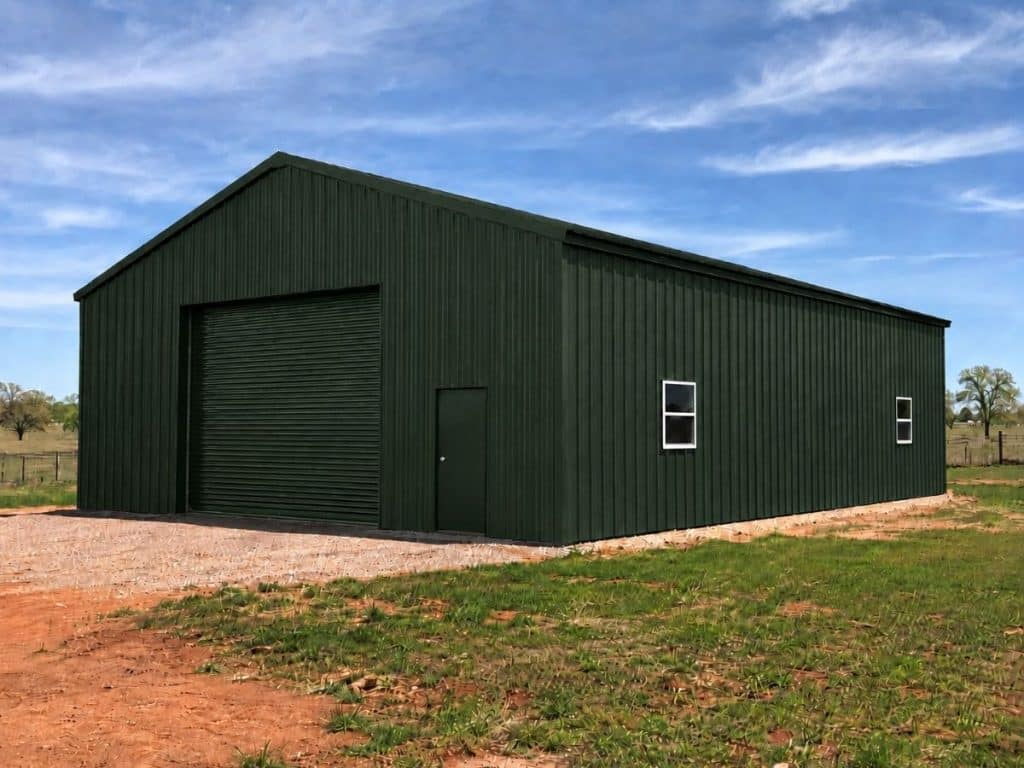
Why Metal Buildings Recycle Better Than Almost Anything Else
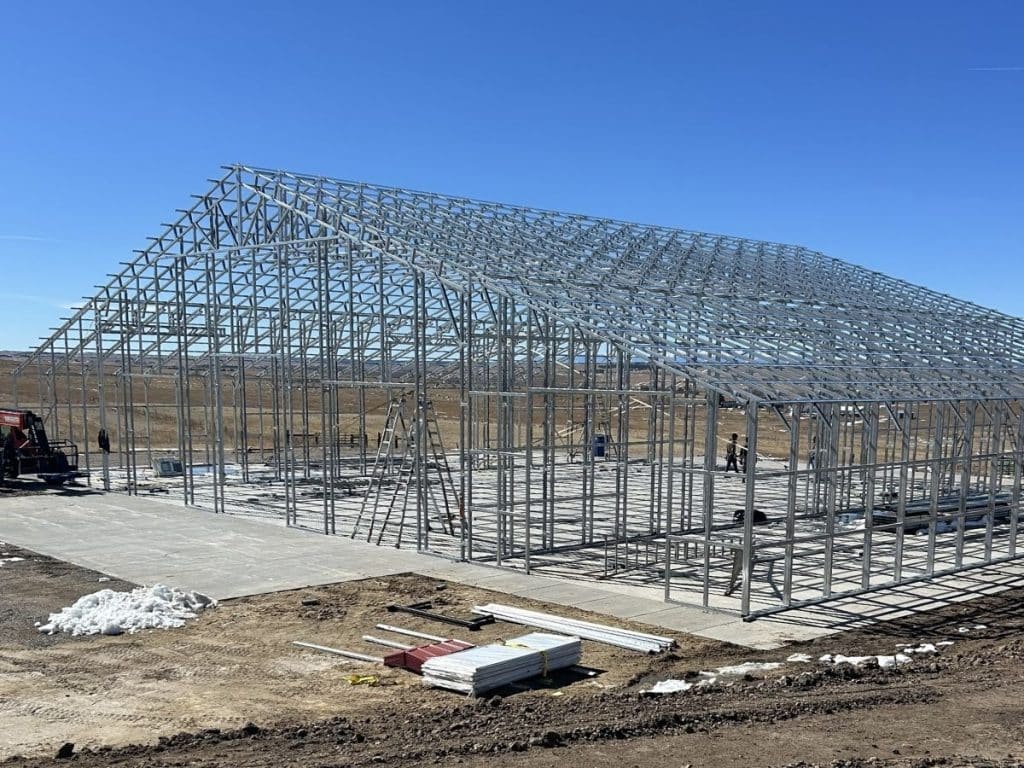
End-of-life recovery is the benefit left off nearly every spec sheet. Steel is the most recycled material in North America by weight, according to the American Iron and Steel Institute, and it recycles back into structural-grade product without losing strength. Structural steel reaching the end of a building’s life gets recovered at rates above 90 percent, and that scrap carries real salvage value instead of a disposal charge.
The contrast with general construction waste is hard to ignore. The U.S. Environmental Protection Agency has estimated construction and demolition debris in the United States at roughly 600 million tons in a single year, more than double the volume of household trash. Most of that is concrete, gypsum, and lumber bound for disposal. A steel frame is one of the few major building components a demolition crew will pay you to haul away.
What a Buyer Should Actually Do With This
Buyers comparing bids should ask three pointed questions instead of trusting a sales sheet. First, ask what gauge steel and what coating the quote includes, because a thin panel with a cheap finish erases the durability advantage. Second, ask whether delivery and installation are included, since freight and crew costs swing the real number. Third, ask about recycled content and how the supplier handles its own scrap, which separates a serious metal building operation from a reseller marking up a catalog.
A common pattern in this segment is that buyers fixate on the lowest sticker price and ignore the 40-year operating and replacement math. Metal America and other established suppliers fold free delivery and installation into the order, which keeps the all-in comparison honest. Concrete usually sits as a separate line, even when the supplier can source it, so any quote that buries the slab deserves a hard second look.
A Few Numbers Worth Putting in the Pro Forma
Specifics make the sustainability argument something a buyer can defend in a meeting. The figures below come from published industry sources and give a builder a baseline to test any quote against.
- Structural steel end-of-life recovery commonly runs above 90 percent, per steel industry and AISC data.
- A well-maintained metal building can serve 40 to 60 years before major structural work.
- U.S. construction and demolition debris has been estimated near 600 million tons in a single year by the EPA.
- Steel produced through electric arc furnaces can carry a large majority share of recycled content.
- Reflective roof coatings measurably lower cooling energy in hot regions like the Gulf states.
None of those depend on a sales pitch. They sit in public reports.
The sustainability case for metal buildings is not a slogan. It is measurable in waste that never leaves the factory floor, in decades of service that push back the next teardown, and in scrap steel that holds value long after the doors stop opening. Builders who price those three factors into a bid make a stronger argument to a buyer than anyone selling on durability alone. The numbers do the talking.
Logan Hermer is the Editor at Metal America, an American-made metal construction company headquartered in Austin, Texas. He has written more than 200 articles covering metal buildings, carports, barndominiums, garages, concrete, and commercial steel structures.